Trim Talk: Choosing the Right Baseboard for Your Home
(updated September 11, 2026)
One of the questions I hear most from homeowners: “What size baseboard should I use?”
A quick rule of thumb
- 8-foot ceilings: 3–4” baseboard keeps things proportional
- 9-foot ceilings: 4–5-1/4” works well
- 10-foot+ ceilings: 5-1/4–7-1/4” holds its own against the extra height
Match the era of your home
We have a lot of older homes here in Roanoke, so I personally think it’s important to try and remain consistent with the predominant style of your home. This isn’t to say you can’t have a “fun” room, or maybe the dining room is more formal than the rest of the house. But, I do think we should consider cohesiveness when appropriate.
Older homes often look best with simpler, flatter profiles. Really old homes often had trim milled on site and often from materials sourced locally; as in from the property itself! This meant the profiles of casing, crown (if even used) were much simpler as they were limited to the tools available on site at the time. Baseboard was often large, and this was the era of homebuilding where even the studs they used to frame the house were something we wouldn’t mind staining and displaying today.
Things get more elaborate with Victorian homes as mass-manufactured profiles become common and also quite popular. We see built-up cornices, lots of egg and dart or dentil moldings, and even the occasional rosette around a casing.
The craftsman style was a response to the opulent, and at times, over the top stylings of the Victorian era. If you pay attention to the details and joinery in the craftsman style, you’ll find many subtle rejections of Victorian styling. So a simpler, more streamlined look is often appropriate. Still, the details are what make it beautiful. Take a door casing for example. Think of the thickness of the stock used for the casing legs, and how it contrasts with the thickness of the built-up header.
We now reach another interesting era: home catalogs and houses built from purchased plans. These homes had simpler trim packages which aesthetically lend themselves towards a craftsman aesthetic. Take a look at the doors in the image below. One with a small header profile, the other with back-banding around the casing.
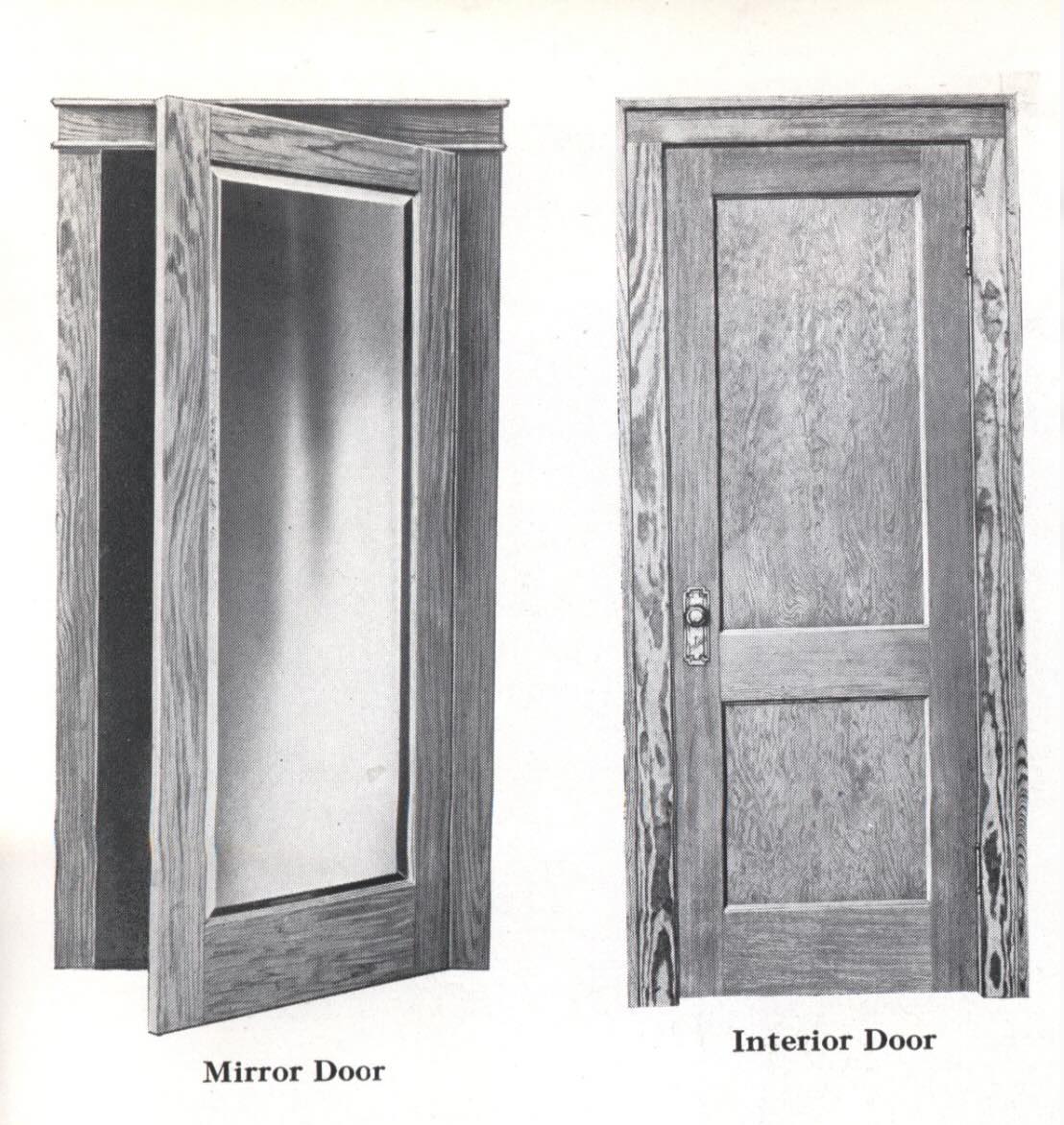
These two door styles are very common in the Roanoke area and I (enjoy) seeing these often. These doors tend to be made out of fir, and while some today would consider the panels to be “paint-grade”, I actually like these with a bit of stain. It’s really old wood that looks unlike anything we have today.
Colonial and traditional homes tend to suit more ornate, multi-step profiles, and we eventually get to more modern finishes that are flat or lack “base cap” which is that rounded profile you often see on top of a baseboard. Some baseboard has the profile milled right into the stock, whereas other types are built up with two pieces, the baseboard itself, and the cap.
All this to say that I think baseboard deserves some careful attention, and deserves a treatment far greater than nailing on whatever they have at the big box store.